
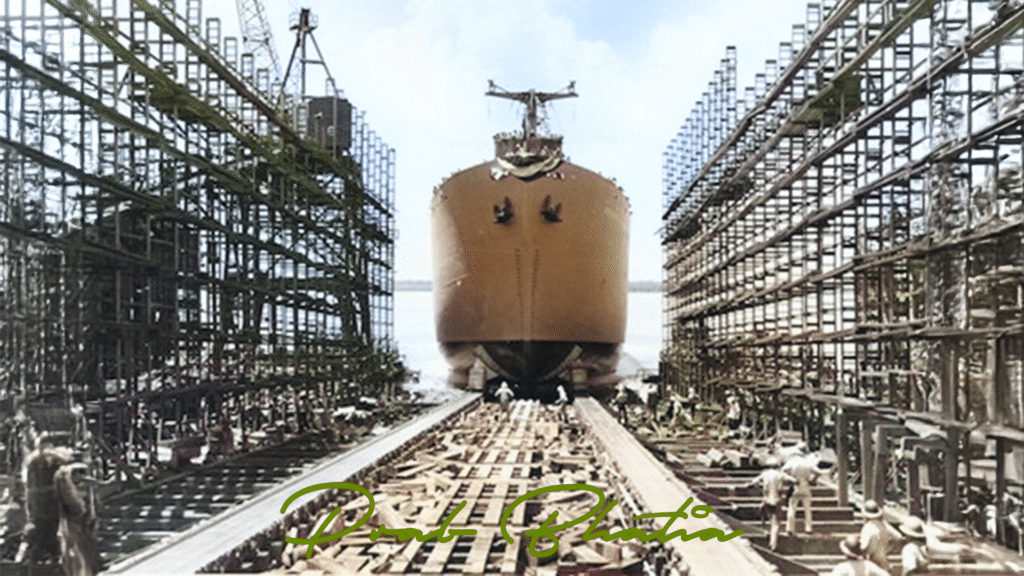
Part 3 of the US–Korea Shipbuilding Series
THE CRISES THAT SPARKED A SHIPBUILDING REVOLUTION
Long before China’s shipyards dominated global headlines and before Japan and Korea rose as maritime powerhouses, America achieved a wartime industrial miracle. It transformed peacetime shipyards into a formidable industrial juggernaut—harnessing steel, sweat, and strategy to build 5,600 ships in just four years, relying entirely on its own resources and capabilities. The scale and speed of this effort, embodied by the Liberty and Victory ship programs, offer invaluable lessons for any modern initiative aiming to rapidly expand maritime industrial capacity. This post, number 3 in the present series, examines how America’s shipyards powered the Allied logistical machine and distils key insights for policymakers today, as the U.S. and Korea work to rebuild maritime strength amid China’s expanding fleet.
THE SCALE — WHAT “5,000 SHIPS” MEANS
Wartime U.S. ship production is often summarised as “about 5,000 ships,” encompassing a broad range of vessels: cargo ships, tankers, escorts, amphibious craft, and naval combatants. A detailed breakdown reveals approximately 3,600 cargo ships, more than 700 tankers, and over 1,300 naval vessels produced during the conflict, totalling more than 5,600. This extraordinary output dwarfed prewar levels and secured a decisive logistical advantage for the Allies. Within this massive effort, the Liberty ship program alone produced 2,710 vessels between 1941 and 1945, accounting for a substantial share of wartime merchant shipping capacity.
HOW THEY DID IT: THE EMERGENCY SHIPBUILDING PROGRAM
During World War II, the traditional labour pool — healthy, young, white males — was off fighting the war, and shipyards were not geared to build ships on an industrial scale. In 1942, German U-boats were sinking Allied ships faster than they could be replaced. The U.S. Merchant Marine was on the brink of collapse. President Roosevelt’s solution? Build ships faster than the enemy could sink them. This was the birth of the Liberty ship program — a mass-production miracle that reshaped global logistics.
BIRTH OF LIBERTY SHIPS: THE BACKBONE OF THE EFFORT
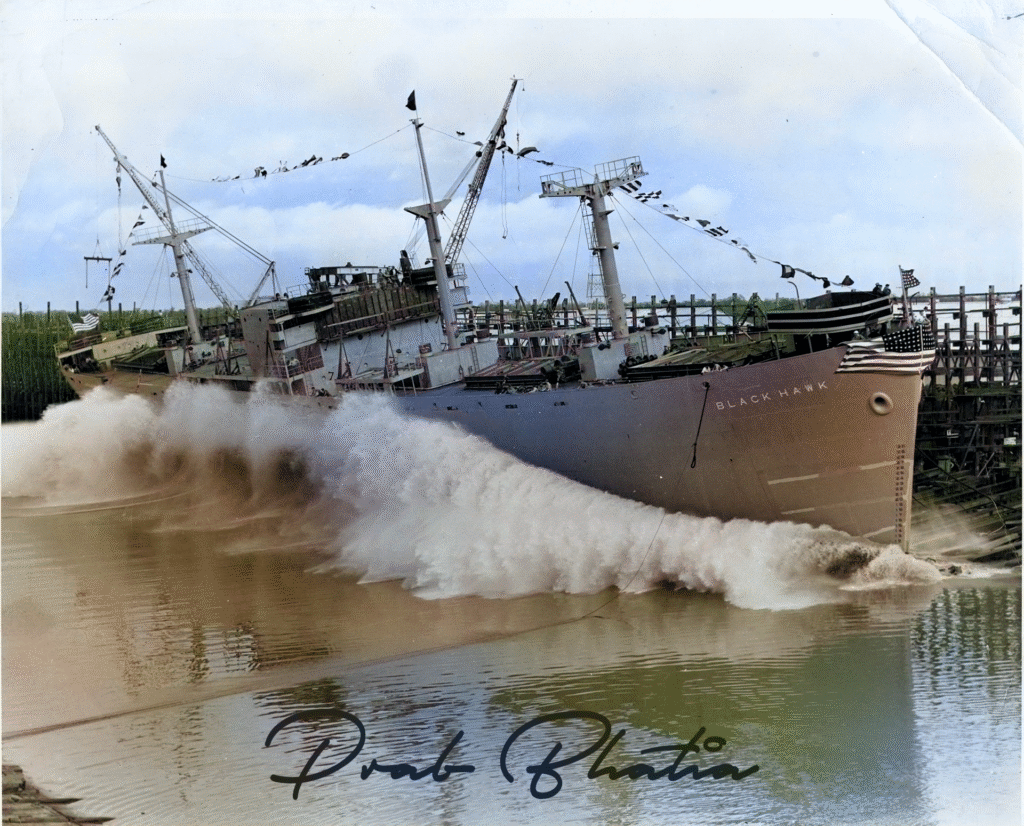
- Based on a British cargo design, Liberty ships were standardised for speed.
- Each ship was 441 feet long, welded instead of riveted, and built from prefabricated sections.
- Over 2,710 Liberty ships were launched between 1941 and 1945.
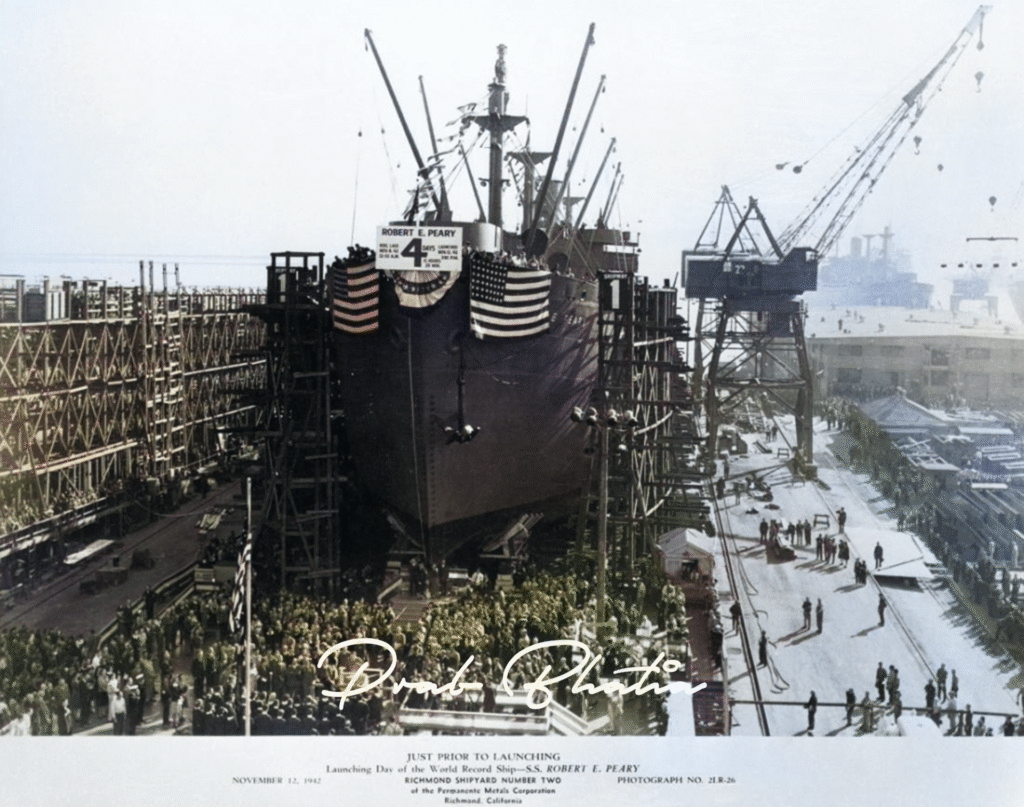
- At peak efficiency, some were assembled in under five days — the SS Robert E. Peary set a record at 4 days, 15 hours.
TECHNICAL TRADE-OFFS AND DURABILITY
Liberty ships were designed to be simple, cheap, and fast to build — not elegant or long-lived. They were steel workhorses meant to survive five years of wartime service; many outlived that expectation and served postwar, but the program accepted technical compromise (lower speed, basic accommodations) to maximise numbers. Later “Victory” ships improved on Liberty designs for speed and durability.
STRATEGIC IMPACT
The sheer volume of ships produced allowed the Allies to replace losses, sustain global supply lines, and project logistics at a scale the Axis powers could not match. The U.S. fleet and merchant marine by war’s end were the largest in the world—a capacity that directly underpinned Allied offensives across multiple theatres. The production surge also demonstrated how industrial policy and focused procurement can alter strategic balance.
- Allied logistics powered by mass shipbuilding
- Liberty ships enabled global supply chains
- Victory ships improved speed and durability
- Lessons: standardisation, modular construction, workforce mobilisation
HENRY J. KAISER AND THE ASSEMBLY-LINE MODEL
Henry J. Kaiser and his shipyards symbolised the new model. Kaiser treated shipbuilding like a mass-production enterprise: standardised processes, multiple identical slipways, systematic labour recruitment and housing, and close coordination of suppliers. Kaiser’s yards dramatically reduced average construction times—from months to just weeks—and set headline records (the famous Robert E. Peary hull was assembled in roughly 4 days and 15 hours). Kaiser’s group alone built hundreds of Liberty and Victory ships.

- Kaiser’s shipyards applied factory logic to shipbuilding: prefab blocks, 24/7 shifts, and on-site training.
- His yards built over 1,400 ships and pioneered industrial welfare — including housing, childcare, and healthcare (which later became Kaiser Permanente).
- Kaiser’s model proved that speed, scale, and social support could coexist.
The wartime effort also required a nationwide industrial mobilisation: steel mills, machine shops, pipe-rooms, and many small suppliers were synchronised to keep the yards fed, while the federal government used contracts, priorities, and financing to guarantee throughput.
The shipyards and any vestiges of Kaiser Industries are long gone, but Henry J. Kaiser’s legacy continues in the health plan he was so proud of. One of the smaller wartime shipyard unions is now the largest union in Kaiser Permanente’s Labour Management Partnership — the Building Service Employees International Union (the 93 janitors), which became the Service Employees International Union in 1968.
The backbone of this effort was the Emergency Shipbuilding Program (1940–1945), run by the U.S. Maritime Commission. Here’s how they pulled it off:
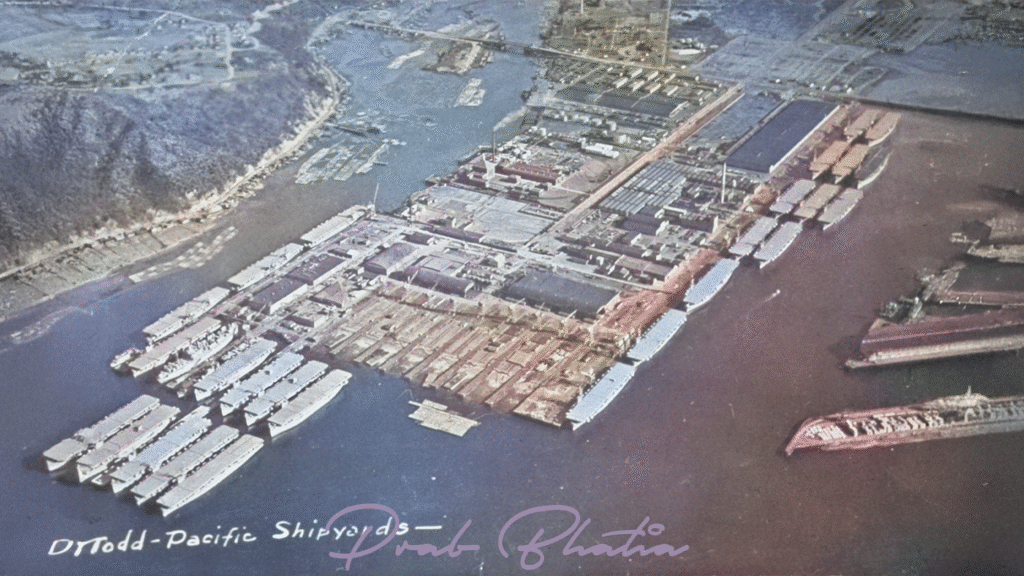
Standardised Designs
Ships like the Liberty and Victory types were built using simplified, repeatable blueprints. This allowed for mass production similar to automobile assembly lines.
They used a single, standardised hull and equipment set, allowing parts, tools, and training to be reused across yards. Standardisation reduced design friction and enabled repetition at scale.
Modular Construction
Shipyards adopted prefabrication, where sections of ships were built separately and then welded together—dramatically speeding up timelines.
Rather than building whole ships piece by piece in a slipway, American yards prefabricated large sections (blocks) in different locations and then brought them together for final assembly. This is the same industrial logic that transformed many manufacturing sectors in the 20th century, including the shipbuilding revolution in Japan during the 1960s and 1970s.
New Shipyards
Entire shipyards were constructed from scratch, such as the Kaiser Shipyards in Richmond, California, which became legendary for launching a Liberty ship in just 4 days, 15 hours.
Welding instead of riveting
Welding saved time and labour. While early wartime welded hulls had learning curves (including some brittle-fracture problems in cold water), the switch from riveting to welding was essential to quick assembly.
Supplier Networks
Over 30,000 companies supplied parts and materials, from engines to rivets.
Workforce Mobilisation—A nation on the move
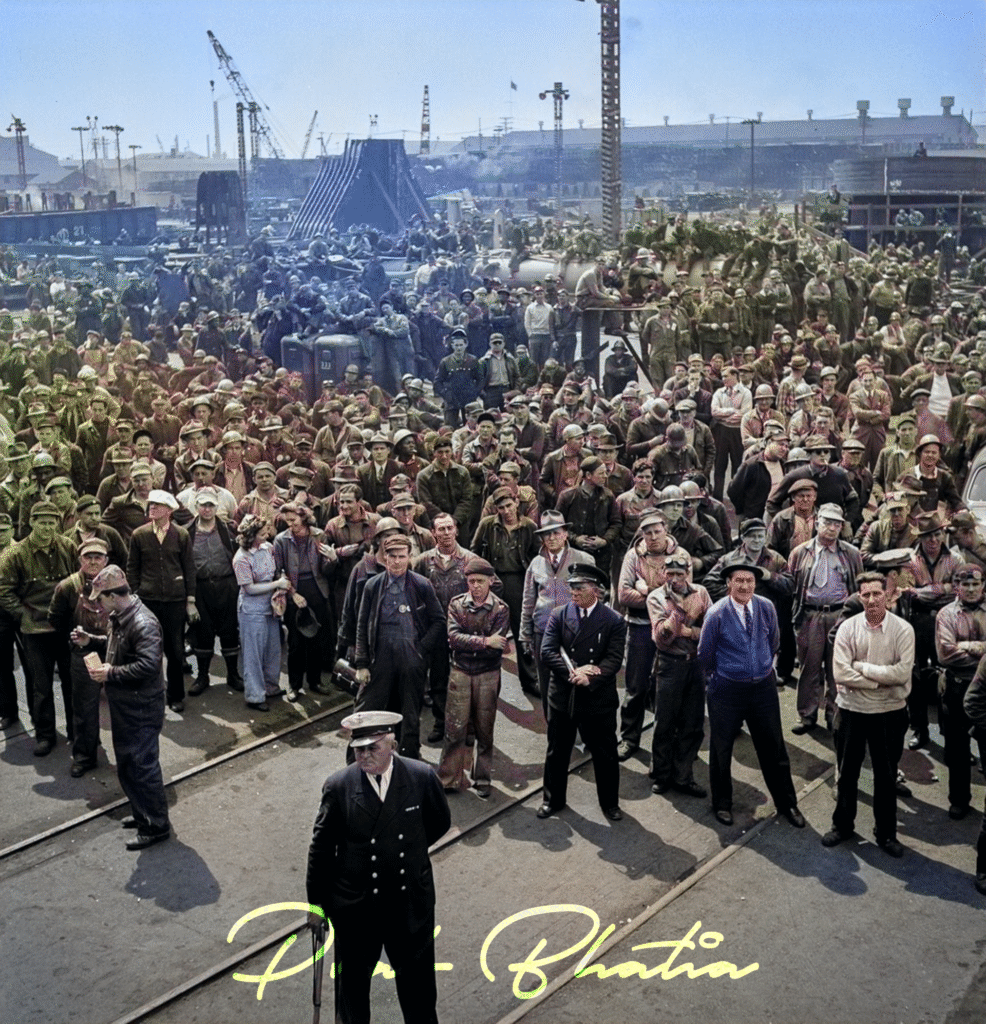
To meet the demands of wartime shipbuilding, America mobilised an unprecedented industrial workforce. Millions of men and women were drawn into the yards, where they were trained in welding, fitting, and fabrication. African Americans and Native Americans entered the industrial workforce in large numbers, often for the first time. Migrants from the South and veterans of the Depression filled the ranks. Shipyard employment led to innovations in employer-provided welfare (Kaiser’s health programs are a famous example) and reshaped regional economies—especially on the U.S. West Coast and Gulf Coast, where many new yards sprang up. The social dimension mattered: rapid recruitment, on-the-job training, and workforce management were integral to the production surge.
Women played a vital role in this transformation—not just as “Rosie the Riveters,” but as welders, electricians, and crane operators. Their story deserves its own spotlight, which we’ll explore in a dedicated post: “The Women Who Built the Fleet.”

TYPES OF SHIPS BUILT
|
Ship Type |
Purpose |
Notable Features |
|
Liberty Ships |
Cargo transport for troops and supplies |
2,710 built; simple, rugged design |
|
Victory Ships |
Faster, more durable cargo ships |
Replaced Liberty ships later in the war |
|
Landing Ships (LSTs) |
Amphibious assault vessels |
Carried tanks and troops to the beaches |
|
Troop Transports |
Moved soldiers across oceans |
Converted liners or purpose-built |
|
Tankers |
Carried fuel across oceans |
Vital for sustaining operations |
|
Combat Ships |
Destroyers, cruisers, submarines |
Built in Navy yards for direct combat |
THE CALL TO BUILD
One of the driving forces behind America’s shipbuilding revolution was President Harry Truman—whose vision and dogged resolve met the challenge of global war head-on. He didn’t just lead; he enkindled the American spirit, rallying citizens and businesses to contribute voluntarily, with full hearts and unwavering purpose. Shipbuilders like Henry J. Kaiser shattered racial and gender barriers—an extraordinary leap for that era—bringing Americans together on the production line. Kaiser championed the welfare of workers’ families while their loved ones fought overseas, and women—Black and white—stepped into factories with grit and determination. Industry surged, fuelled not by mandates but by collective will.
STRATEGIC IMPACT AND LESSONS FOR TODAY
- Liberty and Victory ships sustained Allied logistics across every theatre of war.
- The U.S. outproduced the Axis powers and built the largest merchant fleet in history.
- Standardise platforms for scale and speed.
- Invest in modularisation and supplier depth.
- Mobilise and train a flexible, inclusive workforce.
- Today’s shipbuilding revival must learn from America’s success—and adapt it for a new era.
SUSTAIN POLITICAL WILL AND INDUSTRIAL INVESTMENT
Indigenous shipbuilding is not just an industry—it’s a sovereign capability. It anchors economic resilience, defence readiness, and technological advancement. America’s WWII shipbuilding miracle wasn’t born of convenience, but of existential necessity. It created jobs, accelerated innovation, and secured global logistics—without seeking external help. Infrastructure was built from scratch, powered by resolve.
This is the lesson for nations like India: maritime strength begins at home. To become a credible alternative to Korea’s foreign investment footprint, India must draw from America’s playbook—tailoring it to its own needs rather than outsourcing its ambition. That means long-term capital infusion, coastal industrial corridors, skilled labour pipelines, and policy stability. It means building not just ships, but the entire ecosystem that supports shipbuilding. If India aligns its demographic dividend with strategic foresight, it won’t merely attract investment—it will anchor it.
As we stand at the intersection of history and future, the question remains: can today’s leaders ignite that same fervour, summon shared pride, and rally a nation with unwavering commitment? The legacy of those who built ships, broke barriers, and mobilised a people calls us not just to remember—but to act. With courage. With unity. With purpose. In answering that call, we shape the next great chapter of progress and resilience.
Excellent work. Lots of history. Filled with knowledge.
Thank you so much, Deepak. I’m glad the historical depth resonated with you. This series is about more than ships—it’s about remembering what industrial resolve can achieve. I hope you’ll stay tuned for the next chapters, especially as we explore Korea’s role and India’s future in shipbuilding.
Thanks PSB for the detailed explanation… I am sure that Bharat will also do the necessary in their own circumstances.
Enjoyed this !!
Thank you, Narendra. I truly appreciate your optimism and engagement. Bharat’s path will be different—but if we can draw strategic lessons from history and adapt them to our own circumstances, there’s real potential. Glad you enjoyed the piece—more to come in this series!