prabhjot.bhatia10

THE RESONANCE OF PAIN

“Where echoes soften, and the heart learns its new rhythm” Every so often, a book enters our lives not as a teacher, but as a mirror. I’ve been reading The Courage to Be Disliked lately, and although I’m still early in its pages, one idea has already begun to echo through my thoughts. It is

CAN INDIA BE THE NEXT MELTING POT OF SHIPBUILDING?

Post 9/9 and the last of the US–Korea Shipbuilding Series: Legacy, labour, and latent potential—India’s maritime ambitions face the test of infrastructure, policy, and global trust. I still remember my first morning at sea in December 1972—the horizon wide, the sea calm, the engines steady, and a quiet conviction taking shape: that India, a nation

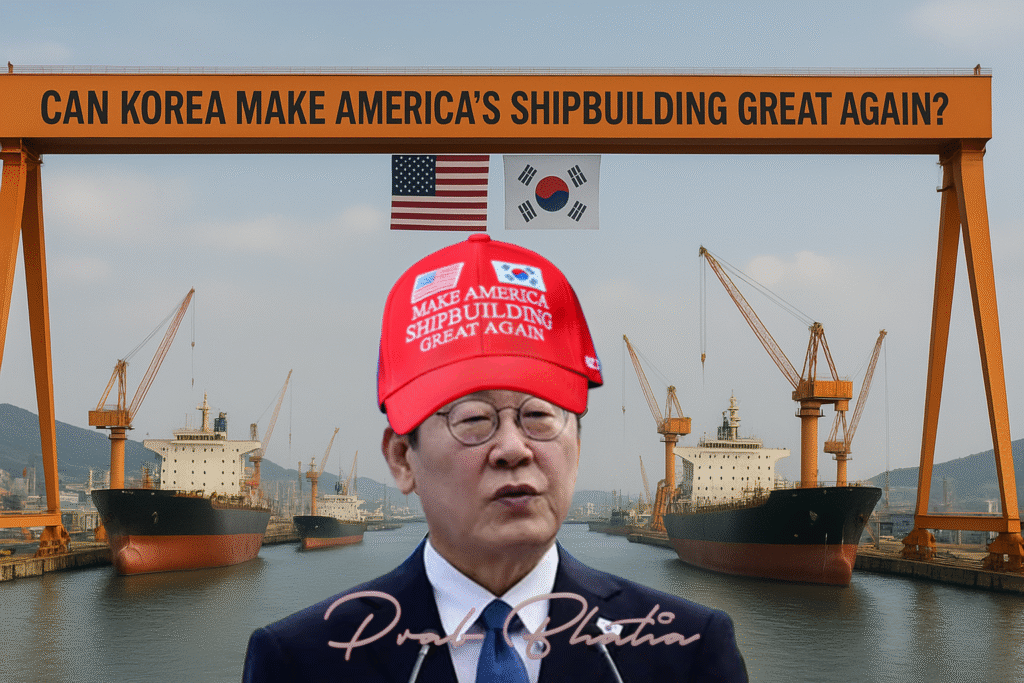
CAN KOREA MAKE AMERICAN SHIPBUILDING GREAT AGAIN?

Post 8/9 of the US–Korea Shipbuilding Series: Strategic alliances, nostalgia, and industrial revival—why Korea believes it can reboot U.S. shipbuilding, and why doubts remain. Strategic alliances, nostalgia, and industrial revival—why Korea believes it can reboot U.S. shipbuilding, and why doubts remain. A LEGACY FORGED IN STEEL During World War II, American shipbuilding rose to a

DRAGON HULLS: CHINA’S SHIPBUILDING REVOLUTION

Post 7/9 of the US–Korea Shipbuilding Series: Fuelled by scale, subsidies, and ambition—China’s rise turned the shipyard into a geopolitical tool. INTRODUCTION: A NATION’S WAKE, A SHIPYARD’S DREAM In the quiet corridors of ABS London and the steel-laced shipyards of Korea, I watched China’s shipbuilding story unfold—not as a headline, but as a slow, deliberate

THE HAN MIRACLE: HOW KOREA OUTBUILT THE WORLD

Post 6/9 of the US–Korea Shipbuilding Series: From steel scarcity to shipbuilding supremacy—Korea’s state-backed ascent reshaped the global maritime order. How did Korea go from building fishing boats to dominating the LNG frontier? Why do global energy giants still whisper the names Geoje, Ulsan, and Okpo with reverence? And what kind of national will turns

THE WOMEN WHO BUILT THE FLEET

Post 4 of the US–Korea Shipbuilding Series   “They said women couldn’t do it. Well, they did it better than we imagined.” — Shipyard foreman, 1944 Between 1941 and 1945, more than 3 million women entered U.S. industrial jobs, and shipyards became one of the most striking examples of their impact. They weren’t just placeholders

HOW AMERICA BUILT ~5,000 SHIPS IN WWII

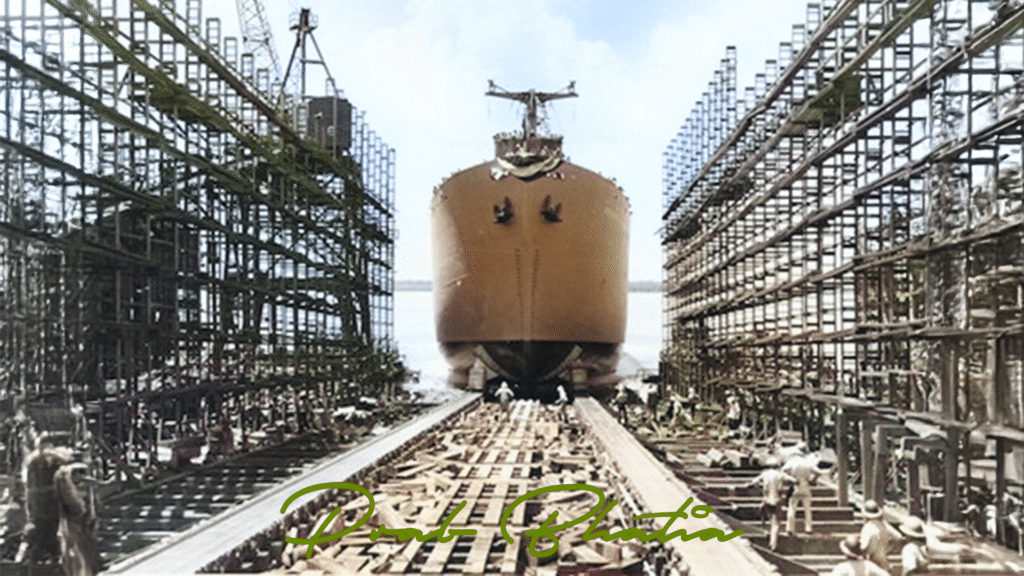
Part 3 of the US–Korea Shipbuilding Series   THE CRISES THAT SPARKED A SHIPBUILDING REVOLUTION Long before China’s shipyards dominated global headlines and before Japan and Korea rose as maritime powerhouses, America achieved a wartime industrial miracle. It transformed peacetime shipyards into a formidable industrial juggernaut—harnessing steel, sweat, and strategy to build 5,600 ships in

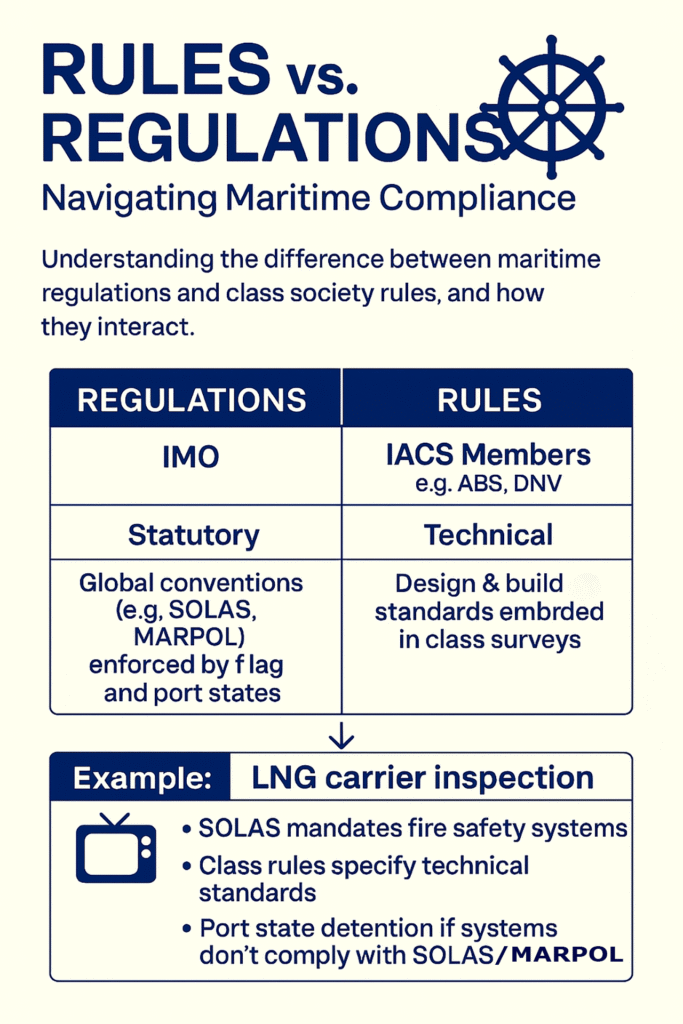
RULES VS. REGULATIONS: NAVIGATING MARITIME COMPLIANCE

In the marine industry, few terms are more casually conflated—and more consequential—than “rules” and “regulations.” Understanding the difference isn’t just academic; it’s essential for shipowners, builders, surveyors, and compliance officers navigating global waters. REGULATIONS: STATUTORY, BINDING, AND ENFORCEABLE Regulations are legal instruments — typically international conventions developed by the International Maritime Organisation (IMO). Once ratified

FORGING THE FUTURE OF SHIPBUILDING

WHY U.S.–KOREA SHIPBUILDING MATTERS NOW Shipbuilding has always been more than steel and rivets. It is about national security, industrial might, and the ability to shape global tides. From the Liberty ships of World War II to the LNG carriers of today, the story of who builds the world’s ships is also the story of