As India celebrates its independence on this day, and Japan marks the end of World War II, another historic moment unfolds: a high-stakes summit between Donald Trump and Vladimir Putin in Alaska, aimed at ending the Russia–Ukraine war.
Three events. Three continents. One truth: freedom always comes at a cost.
1. INDIA’s INDEPENDENCE: A MIDNIGHT OF JOY AND HORROR
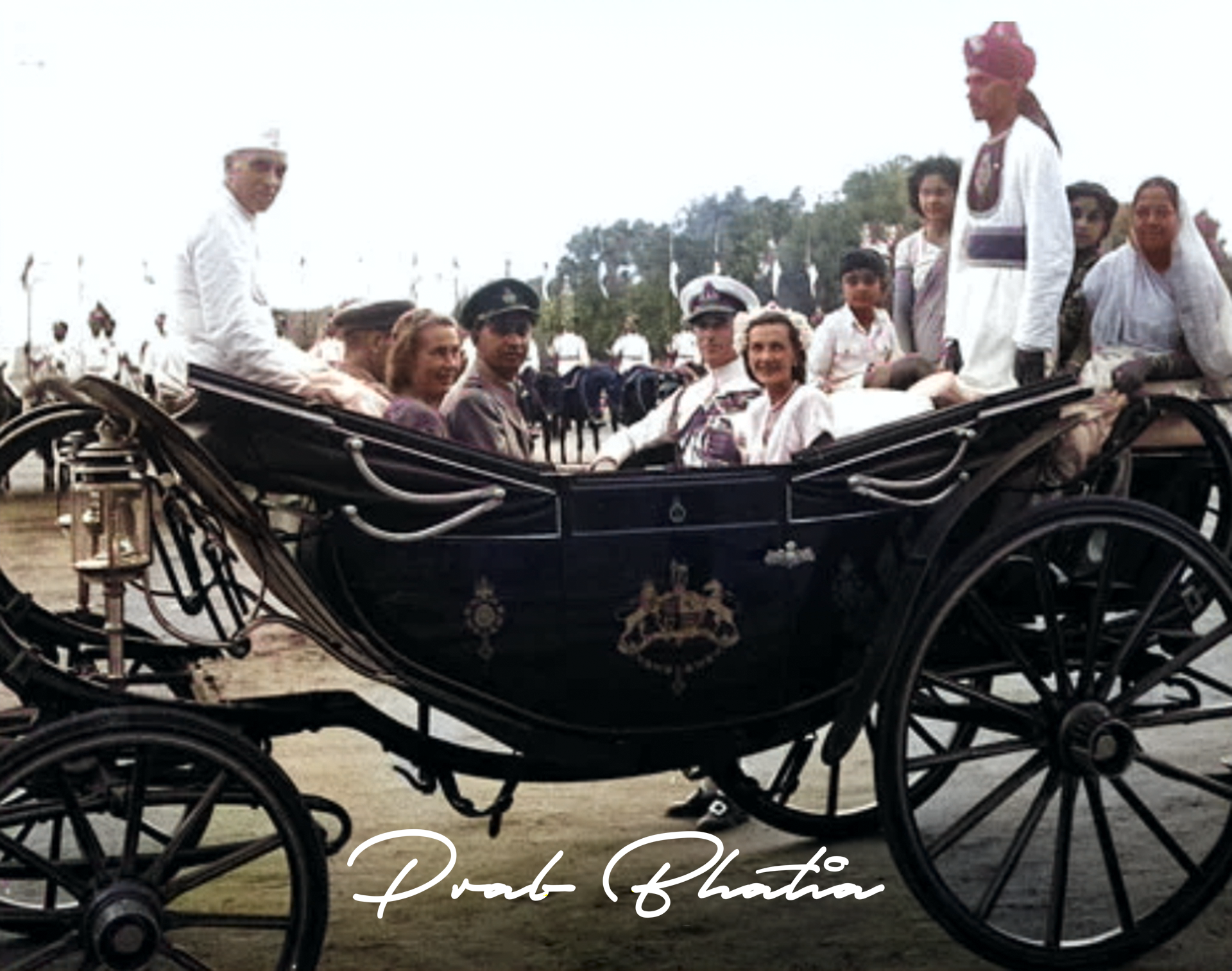
On this day in 1947, after nearly two centuries of British colonial rule, India finally broke free from the chains of occupation. While Gandhi—the father of the nation – and (uncle) Nehru – the architect of free India—stood before jubilant crowds, basking in the glow of newfound liberty, the state of Punjab bled.
Lord and Mrs Mountbatten, along with "Uncle" Nehru greeting the jubilant crowd
Jawaharlal Nehru’s famous words, “At the stroke of the midnight hour, when the world sleeps, India will awake to life and freedom,” rang hollow for many in Punjab. For them, it was not the dawn of liberty, but the onset of devastation.
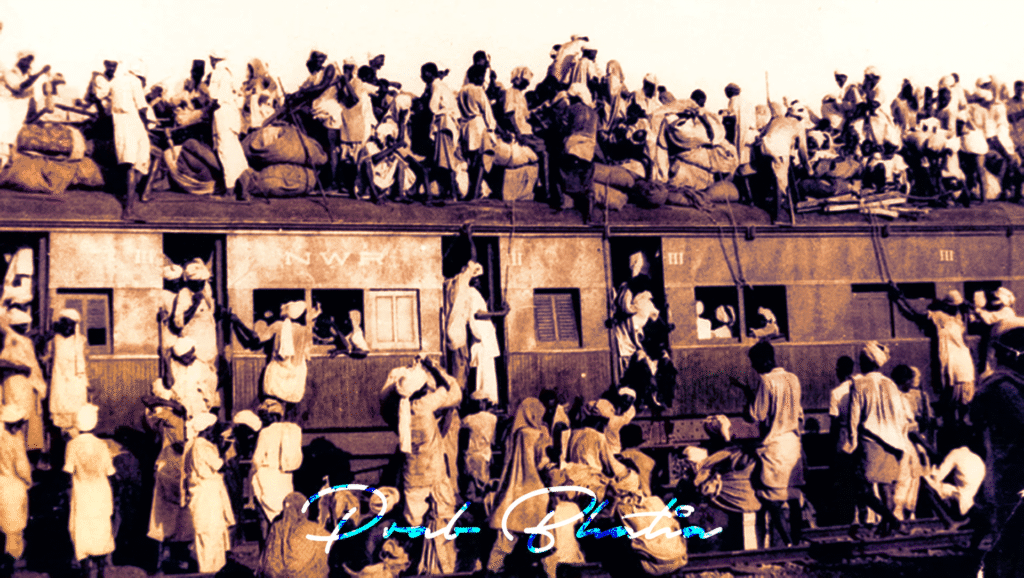
Trains full of refugees uprooted from ancestral lands now in new Pakistan arriving in Amritsar (India)
Many trains arriving from new Pakistan were full of corpses
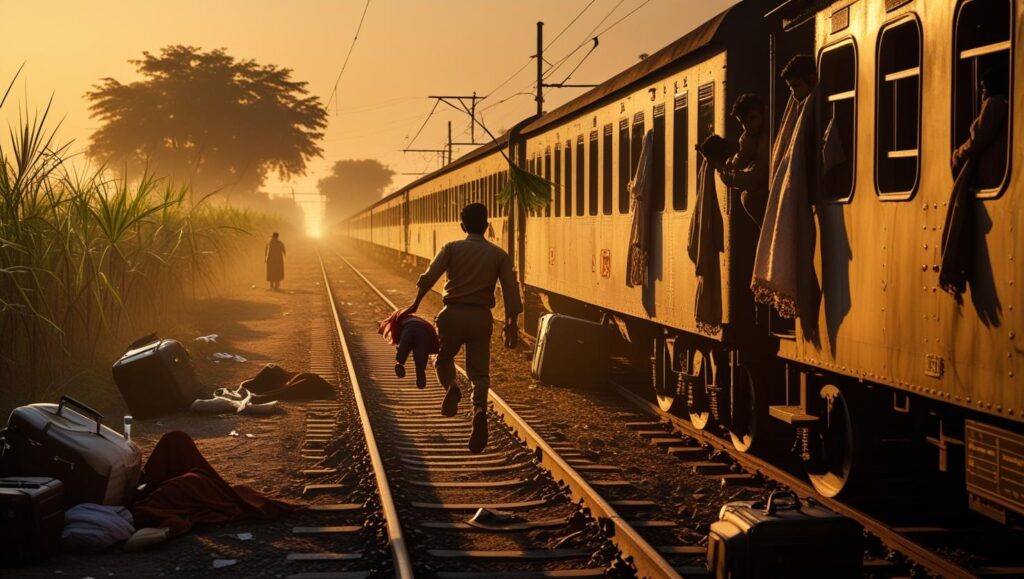
Many refugees fleeing the newly created nation of Pakistan never even reached the train stations. And for those who did, many never made it across the border alive. Just a few kilometres outside Lahore, refugee trains were intercepted – entire carriages halted, passengers slaughtered. Women and girls were abducted, gang-raped along the tracks, and left to die in the open fields. The carnage was unspeakable.
These were not isolated incidents. They were part of a systematic unraveling of humanity – where the very trains meant to carry hope and survival became steel-lined tombs.
Amrita Pritam, the great Punjabi poet, captured this anguish in her iconic poem:
“ਅੱਜ ਆਖਾਂ ਵਾਰਿਸ ਸ਼ਾਹ ਨੂੰ” (Ajj Aakhaan Waris Shah Nu) Today, I call upon Waris Shah – speak from your grave. Turn the pages of your book of love once more. Look at your Punjab, today it’s weeping. Corpses fill the Chenab, and blood flows through its fields.
She didn’t just mourn the violence – she mourned the betrayal of shared culture, language, and humanity. Her words are a lament for the soul of Punjab, where brothers became enemies, and women bore the worst of the suffering.
The very soil that had nurtured generations was now soaked in blood. The price of freedom was staggering.
THE HUMAN COST OF PARTITION
15–20 million people were displaced from their ancestral homes on both sides of the newly drawn border – the largest migration in human history, including members of the author’s own family.
Up to 2 million were killed in communal violence.
Hundreds of thousands of women were abducted, raped, or killed – some by their own families to “protect honour.”
The violence wasn’t distant – it was intimate. Neighbours turned on neighbours. People who had shared food, language, and festivals became enemies overnight. Entire communities vanished. Trains arrived full of corpses. And the dead? They had no graves, no memorials, no names.
THE RADCLIFFE LINE: A BORDER DRAWN IN BLINDNESS
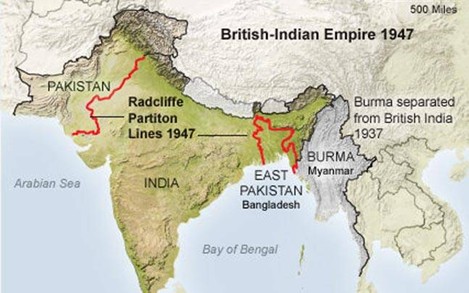
The Radcliffe Line, the boundary drawn in 1947 to divide India and Pakistan, was carved in just five weeks by a man who had never set foot in India. It sliced through Punjab and Bengal with shocking disregard for geography, community, and culture – leaving behind a legacy of chaos and grief.
India Pakistan Boundary Line: On this day, 79 years ago, a man who never visited India drew Radcliffe Line that divided India and Pakistan
JALIANWALA BAGH MASSACRE
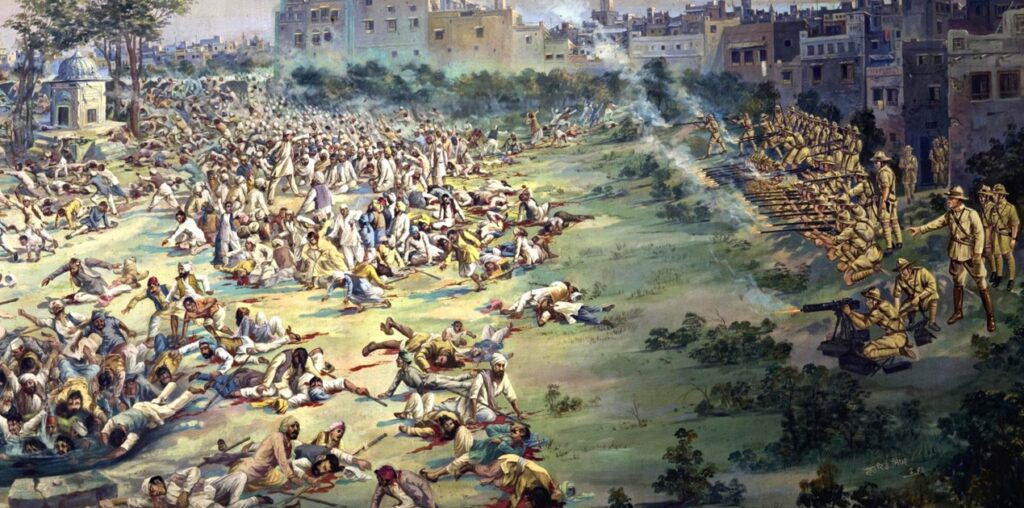
In Amritsar, Punjab, thousands of Indians gathered peacefully at Jallianwala Bagh during the Baisakhi festival to protest the repressive Rowlatt Act and the arrest of nationalist leaders. Without warning, Brigadier-General Reginald Dyer ordered his troops to block the exits and open fire on the unarmed crowd. The shooting lasted about 10 minutes, with 1,650 rounds fired, killing hundreds and injuring over 1,200. The garden’s narrow exits trapped many, turning the site into a death trap.
This massacre marked a turning point in India’s independence movement, shattering trust in British rule and galvanizing national resistance
Jallianwala Bagh Massacre - Over 1300 Punjabis gunned down during peaceful demonstration by orders of Gen Dyer
Before Partition, the Sikh population in undivided India was approximately 6.5 to 7 million – just 1.7% to 1.8% of British India’s population. Yet their contribution was disproportionately immense.
Of 121 Indians hanged by the British, 93 (> 76%) were Sikhs.
In the Jallianwala Bagh massacre (13 April 1919), where peaceful demonstrators (mostly Sikhs) were gunned down by Gen. Dyer, 799 of the ~1,300 (> 61%) killed were Sikhs.
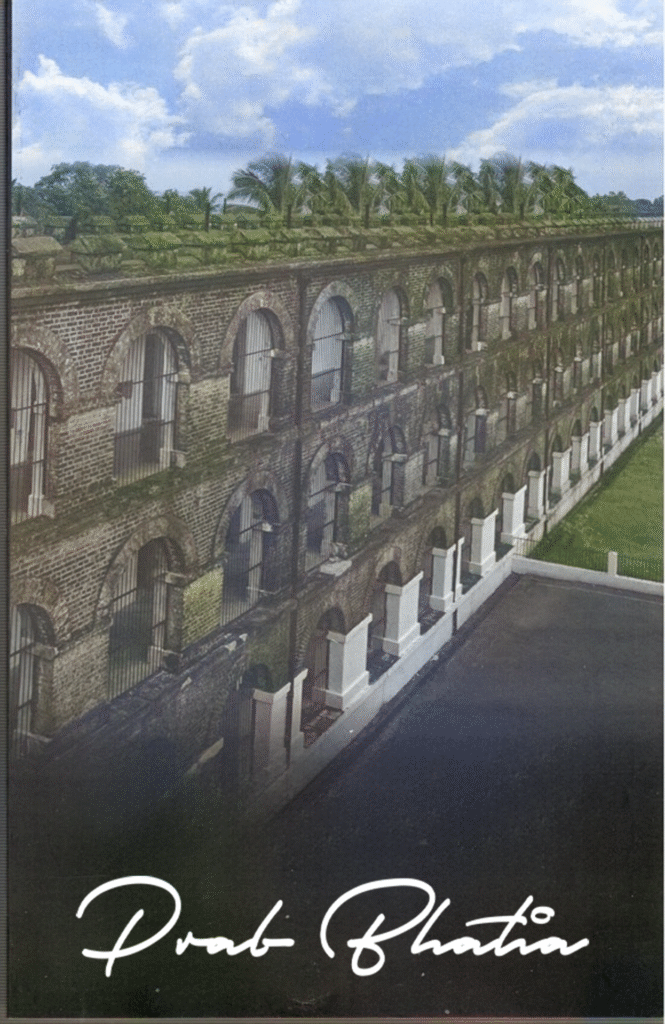
Of 2,626 sentenced to life imprisonment in Kala Paani (Cellular Jail, Port Blair), 2,147 (> 81%) were Sikhs.
These statistics are not just numbers. They are symbols of collective martyrdom, especially for a community that has often been underrepresented in official narratives. Their courage wasn’t symbolic – it was sacrificial. Their blood marked the soil of Amritsar, Lahore, and countless colonial jails. And yet, their stories are often missing from the podiums and parades.
They crossed Kala Paani, but their spirit never drowned. It waits – for remembrance.
THE SIKH CONTRIBUTION: COURAGE IN SILENCE
Amid this darkness, the light of resistance burned bright. Millions took part in the freedom struggle. But while Gandhi and Nehru are etched into national memory, countless others remain unnamed – especially from the Sikh community, whose sacrifices are rarely acknowledged in official commemorations.
As we raise flags and sing patriotic songs and anthems, let us also raise awareness. The Sikh community bore a disproportionate share of the struggle – through gallows, prisons, and bullets. Their legacy is not just one of bravery, but of quiet endurance. May we honour them not just in history books, but in the conscience of a free nation.
LEGACY AND REMEMBRANCE
Kala Paani (Black Water) prison in Port Blair, Andaman Nicobar Islands
The term Kala Paani symbolized both physical exile and social ostracism – crossing the ocean meant loss of caste and community for many Indians. Yet these revolutionaries, many of them Ghadarites, Babbar Akalis, and Kirti Kisan activists, endured isolation with spiritual resilience.
After independence, the Cellular Jail was partially demolished. But three wings remain, preserved as a National Memorial since 1969.
Today, Kala Paani stands as a solemn reminder of colonial cruelty – and the resilience of India’s freedom fighters.
Among the long shadows cast by the Jallianwala Bagh massacre was a young orphan named Udham Singh. A survivor of that blood-soaked day in Amritsar, he carried its memory like a wound that never healed. Twenty-one years later, in 1940, Singh travelled to London and assassinated Sir Michael O’Dwyer – the former Lieutenant Governor of Punjab who had endorsed General Dyer’s actions. The killing took place at Caxton Hall, during a public event. Singh was arrested, tried, and hanged at Pentonville Prison. In court, he declared his name as Ram Mohammad Singh Azad – a symbolic fusion of India’s major faiths and a defiant cry for freedom.
His act was not one of vengeance alone, but of remembrance. Udham Singh became Shaheed-i-Azam – a martyr whose silence had spoken for millions.
CELEBRATION WITHOUT COMMEMORATION
All across India, August 15th is marked by flag hoisting, parades, and patriotic speeches and songs. But there is no official ceremony to mourn the millions displaced, raped, or killed during Partition – arguably the most traumatic chapter in India’s modern history.
There is no national moment of silence. No memorial service. No candlelit vigil for the trains that arrived full of corpses. No state tribute to the women who were abducted or killed by their own families. No official remembrance of the Sikh martyrs who were disproportionately punished and erased.
THE SILENCE MUST SPEAK
India stands at a crossroads. Not just politically, but morally. As we move forward, we must ask: Who do we remember, and why? Whose stories are told, and whose are silenced?
The silence around our forgotten dead is not benign. It is a scream waiting to be heard. And it is our duty as citizens, as storytellers, as human beings. To listen.
Let us light a candle beside the wound. Let us name the unnamed. Let us remember. Not to mourn the past, but to shape a more just and compassionate future.
2. VICTORY OVER JAPAN DAY: THE FORGOTTEN SOLDIERS OF THE EAST
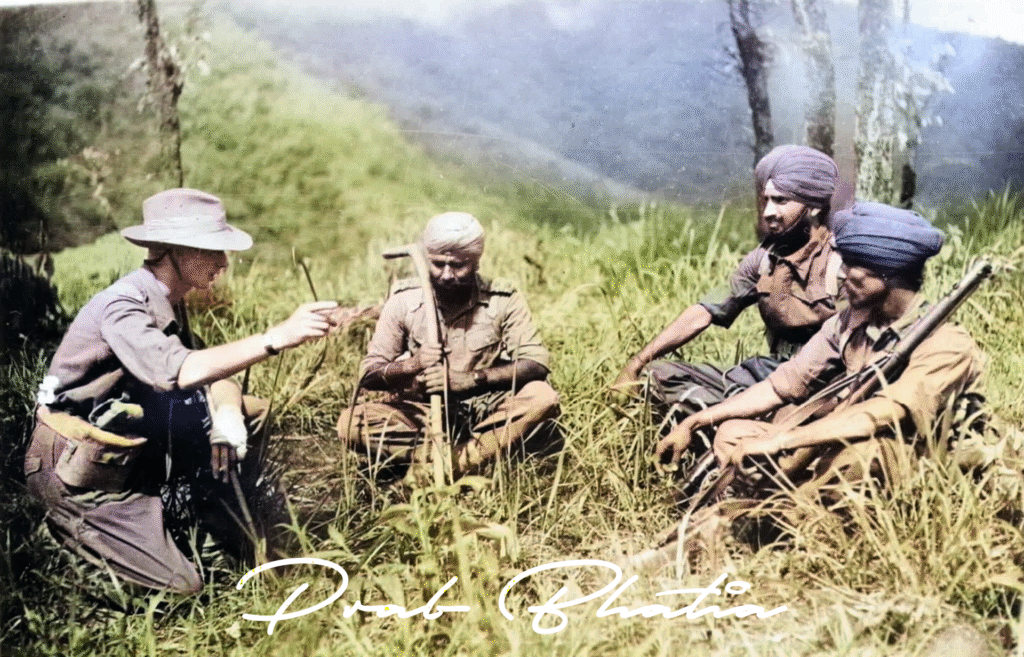
British Indian Army soldiers contemplating strategy to push Japanese out from Burma
August 15 also marks Japan’s surrender and the end of the Pacific War – Victory over Japan Day (VJ Day). While Europe had celebrated VE Day in May, the Pacific war dragged on until Japan’s surrender in 1945.
But for the soldiers who fought in Burma and Southeast Asia, it was a chapter of brutal sacrifice. Most people don’t even know their names.
The Burma Campaign involved over 1 million troops, mostly Indian.
Sikhs, Muslims, Gurkhas, and Africans fought side by side.
Over 200,000 Allied casualties, including 40,000 killed.
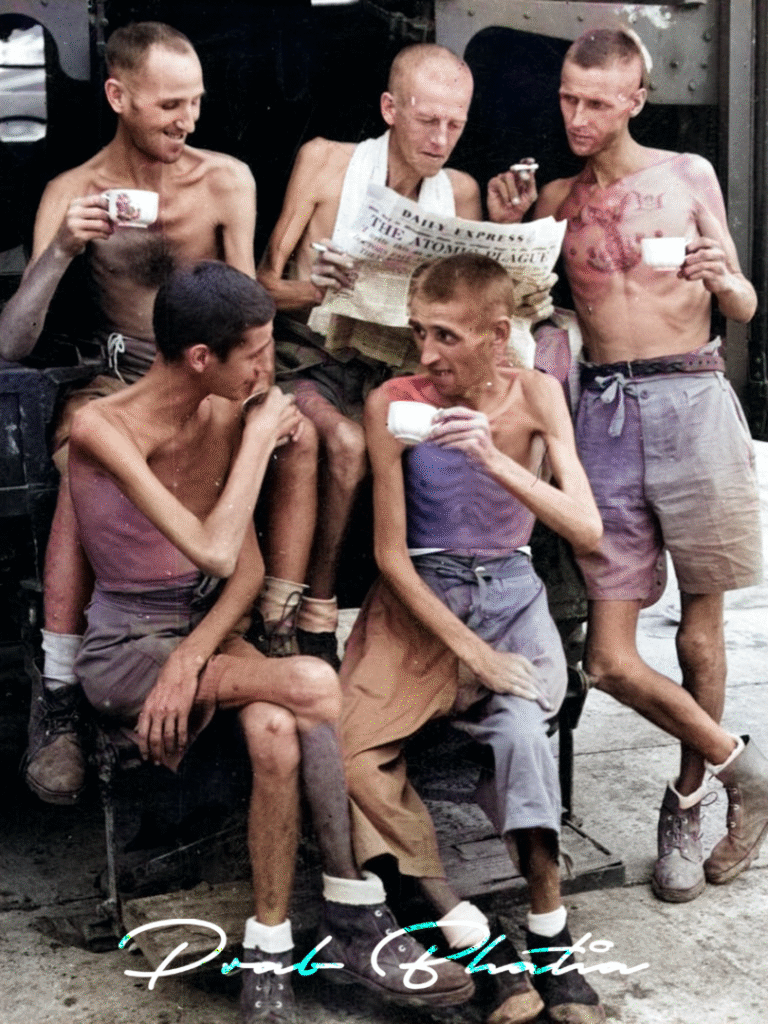
POWs faced starvation, torture, and execution—some used as target practice by Japanese forces.
The Burma Railway, or Death Railway, claimed over 12,000 Allied lives.
These men are now called the Forgotten Army. Their graves lie in foreign soil. Their stories remain untold.
Starved British POWs
WHAT HISTORY REMEMBERS
The Burma Campaign lasted from 1941 to 1945.
The Fourteenth Army was the largest British Commonwealth force—over 1 million troops, mostly Indian.
Sikhs, Muslims, Gurkhas, and Africans fought side by side.
Over 200,000 Allied casualties, including 40,000 killed.
Many buried in Burma, never repatriated or memorialized in Britain.
Beyond the battlefield, the horrors continued. Japanese POW camps were infamous for their cruelty.
JAPANESE ATROCITIES
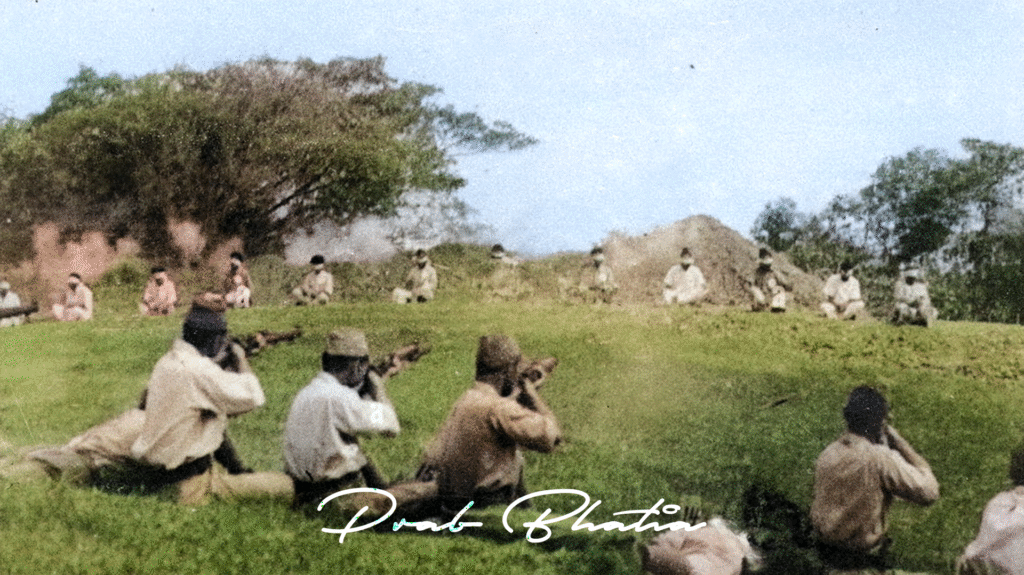
Japanese using blind-folded Sikh POWs for target practice
“Captured airmen were beaten to death, beheaded, buried alive, cut into pieces for medical experiments – and in a few cases, eaten,” wrote historian Gavan Daws.
27% death rate among Allied POWs – 7x higher than in German camps
Starvation, torture, and forced labour were routine
POWs were used as target practice, buried alive, or subjected to medical experiments
The “Hell Ships” transported prisoners in suffocating conditions, leading to thousands of deaths
The Burma Railway, or Death Railway, claimed over 12,000 Allied lives
These men are now called the Forgotten Army. Their courage helped end a global war, yet their stories remain buried in the margins of history.
CEREMONIES FOR THE FORGOTTEN ARMY
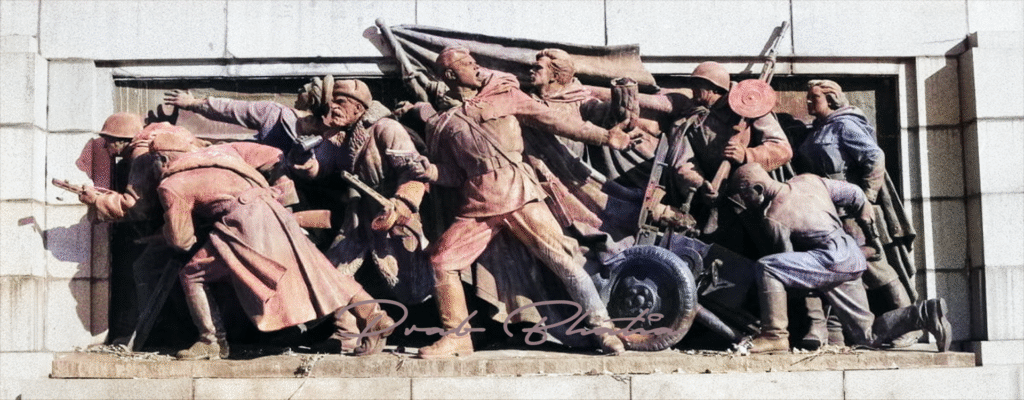
One of the monuments to commemorate unnamed soldiers killed during the wars.
In contrast, on August 15th, the United Kingdom commemorates Victory over Japan Day (VJ Day)—marking the end of World War II in the Pacific. This year’s ceremonies were especially poignant, honouring the “Forgotten Army” who fought in brutal conditions across Burma, Malaya, and the Pacific islands.
Here’s what unfolded:
National Service of Remembrance at the National Memorial Arboretum, attended by King Charles III and Queen Camilla, alongside veterans and dignitaries.
Two-minute silence observed across the country.
Flypasts by historic aircraft including the Dakota, Hurricane, and Spitfire.
Bagpipers’ lament performed at dawn at The Cenotaph and Edinburgh Castle.
Buildings illuminated nationwide—from Buckingham Palace to the White Cliffs of Dover.
Veteran tributes including emotional testimonies from POWs and soldiers of the 11th Sikh Regiment
These ceremonies are not just symbolic—they are acts of national conscience. They acknowledge suffering, sacrifice, and the long shadow of war.
3. “BREAKING THE ICEBERG” - A SUMMIT THAT MIGHT JUST CHANGE EVERYTHING
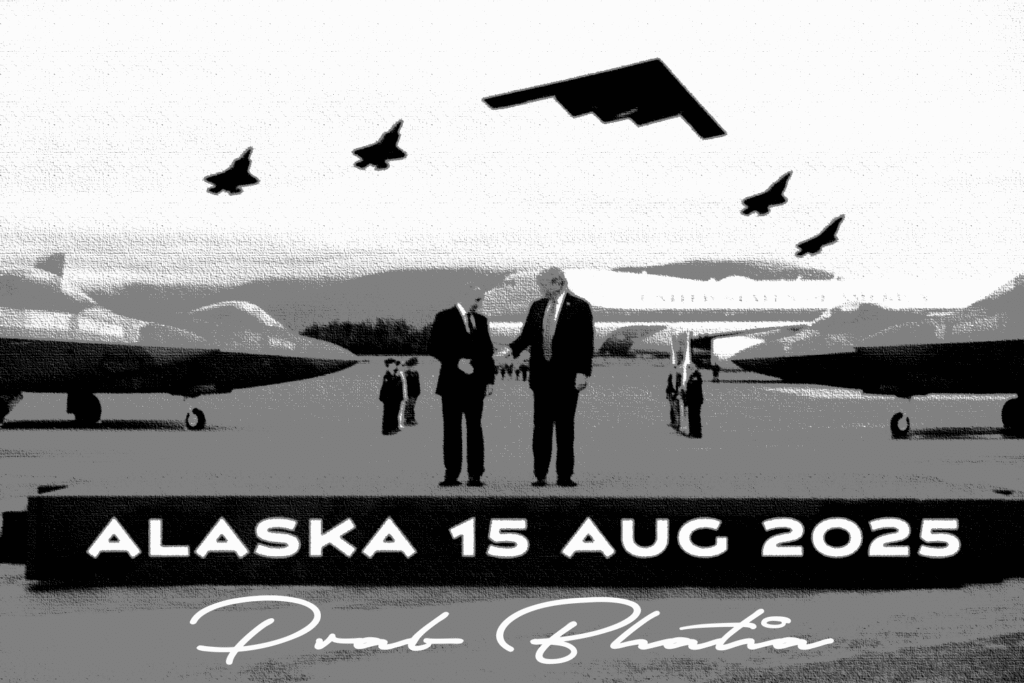
"Breaking The Iceberg" - Trump taking initiative to welcome Putin in Alaska
The Trump–Putin summit in Anchorage on August 15, 2025, wasn’t just another diplomatic handshake – it was a tectonic shift. The world’s two most important leaders sat face-to-face to break the ice, or rather to break the iceberg between the east and the west. No EU meddling, no NATO theatrics. Just two men, in Alaska, stepping out of their motorcades and onto a red carpet flanked by fighter jets and the shadow of a B-2 bomber overhead. The symbolism was unmistakable: this was serious.
For the first time in years, we saw something rare – clarity. A shared tone. No shouting. No finger-pointing. Just two leaders, once adversaries, now aligned in purpose: to stop the war. Bloomberg called it “productive.” Le Figaro admitted it was “real progress.” Even The New York Times, ever sceptical, spun it as a win for Putin – but that misses the point. In peace talks, there are no victors. Only grown-ups trying to end a war that’s been bleeding the world dry and feeding only the arms dealers.
You don’t win lasting peace by bombing your enemy into oblivion. You win it by sitting across the table, swallowing pride, and finding a way forward. It wasn’t perfect. But it was a start. A step toward sanity. Toward survival. This isn’t a video game where you respawn after destruction. This is real life, with real stakes. And Trump and Putin – whatever you think of them – sat down like adults to defuse a conflict that had the potential to spiral into nuclear annihilation.
It was bold. It was overdue. And it was something other world leaders were either too afraid or too paralyzed by protocol to attempt. This meeting cracked open a door. And once open, more doors may follow.
If the war ends, August 15 could be remembered not just as a date on the calendar – but as the day diplomacy dared to rise above destruction. A day when two adversaries chose dialogue over devastation. A day when history didn’t just shift – it pivoted toward possibility.
1 thought on “15 AUGUST: A DAY OF LIBERATION, LOSS, AND GLOBAL RECKONING”


我来看看是咋么回事