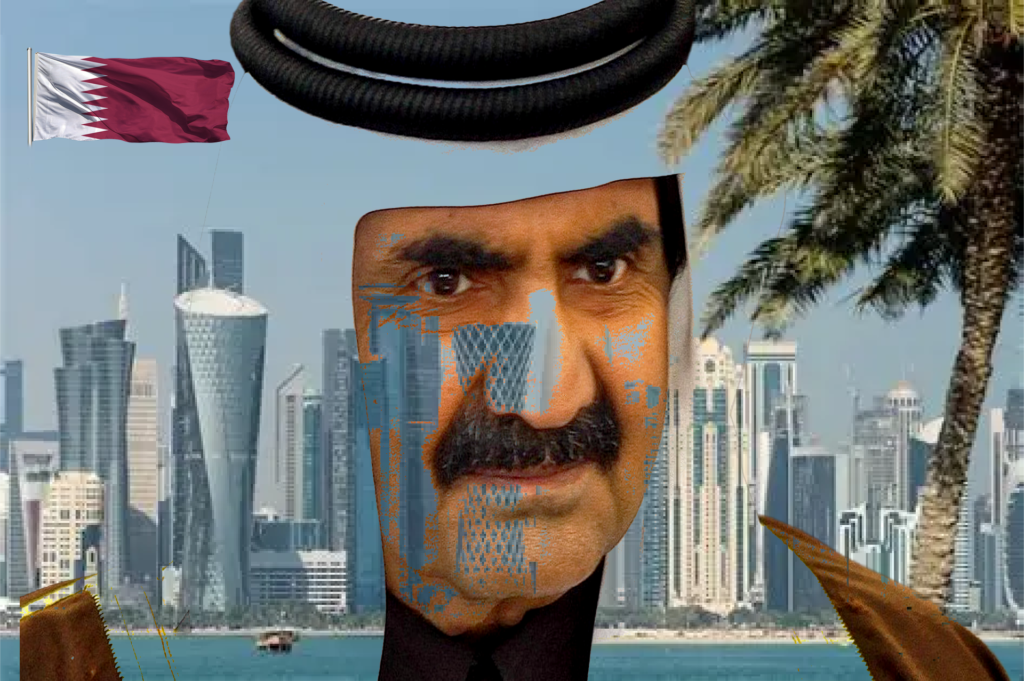
On 12 July 2026, Qatar lost the man who defined its modern identity. Sheikh Hamad bin Khalifa Al Thani, the former Emir and the visionary who transformed a quiet Gulf peninsula into a global force in energy, diplomacy and culture, passed away at the age of 74. His death feels less like the departure of a leader and more like the closing of a chapter in the story of the Middle East.
Hamad’s rise to power in 1995—a bloodless palace coup—was the beginning of a national metamorphosis. Over the next 18 years, Qatar’s natural gas production soared to 77 million tonnes per annum, giving it the highest per‑capita income in the world. Under his watch, Qatar stepped confidently onto the world stage: the 2006 Asian Games, the 2011 AFC Asian Cup, the 2012 UN Climate Change Conference, and the audacious bid for the 2022 FIFA World Cup.
He founded the Qatar Investment Authority, which reshaped global investment flows with more than USD 100 billion placed across iconic assets—Harrods, Heathrow, The Shard, Volkswagen, Siemens, Shell, Paris Saint‑Germain. Hamad understood that influence was not merely political; it was architectural, cultural, financial, and technological.
WHERE HIS VISION MET MY WORLD
For me, his legacy is not abstract. It is welded into steel, embedded in control systems, and carried across oceans.
Between 2005 and 2011, Qatar undertook one of the most ambitious maritime engineering programmes in history: the USD 12 billion construction of forty‑five ultra-large LNG carriers at Hyundai, Samsung and DSME. Fourteen of these were the legendary Q‑Max vessels—twin‑screw giants with onboard reliquefaction plants, still the largest LNG carriers afloat.
I was fortunate to be part of the small but specialised engineering team that lived this project from the inside—first in Doha, then in South Korea. Many of the technologies we deployed had no existing Class rules. We had to build the rulebook as we built the ships: risk assessments, first‑principles engineering, on‑board R&D, and long nights in shipyard offices where the smell of steel dust mixed with the thrill of invention.
And the Emir was not a distant patron. He took a personal interest in the fleet. Members of the royal family were placed in the newbuilding offices not as ceremonial observers but as trainees — learning, contributing, and building the indigenous talent pool that would carry Qatar’s energy future forward.
A MOMENT I WILL NEVER FORGET
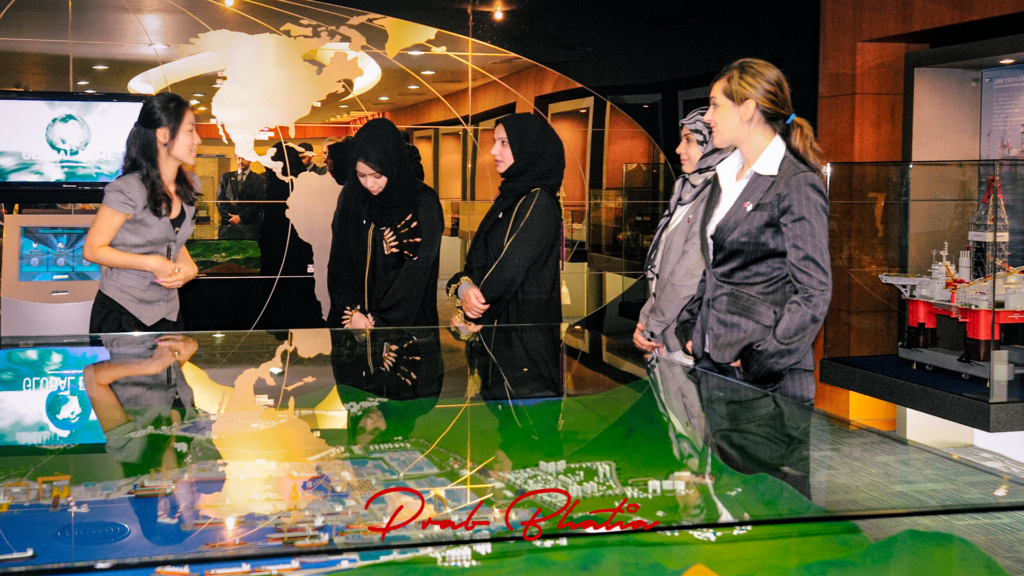
Q‑Max Naming Ceremony, DSME Shipyard — Two Qatari princesses, Shiekha Mayys and Sheikha Hind, standing among engineers and shipbuilders, embodying the Emir’s belief that the future of Qatar must be learned, lived, and built firsthand.
At the DSME shipyard, during the naming ceremony of one of the Q‑Max vessels, I witnessed a scene that captured the essence of Hamad’s vision. Two Qatari princesses—poised, curious, deeply engaged—stood among engineers, naval architects, and shipyard workers. It was not a photo‑op. It was participation. It was the next generation standing at the bow of a vessel that symbolised Qatar’s future.
That day, I realised that Qatar was not merely building ships. It was building identity, capability, and confidence.
THE FATHER EMIR
At home, he was known simply as the “Father Emir.” He transformed a country of half a million people—most of them expatriates—into a nation with outsized influence in diplomacy, energy markets, and global media. Al Jazeera, the LNG megaprojects, the sovereign wealth strategy, and Qatar’s assertive foreign policy all trace their origins to his tenure.
Sheikh Hamad bin Khalifa Al Thani is survived by his three wives and their children. Among them, Sheikha Mozah, his second wife, became an international figure in her own right—and even lent her name to one of the largest LNG carriers in the fleet.
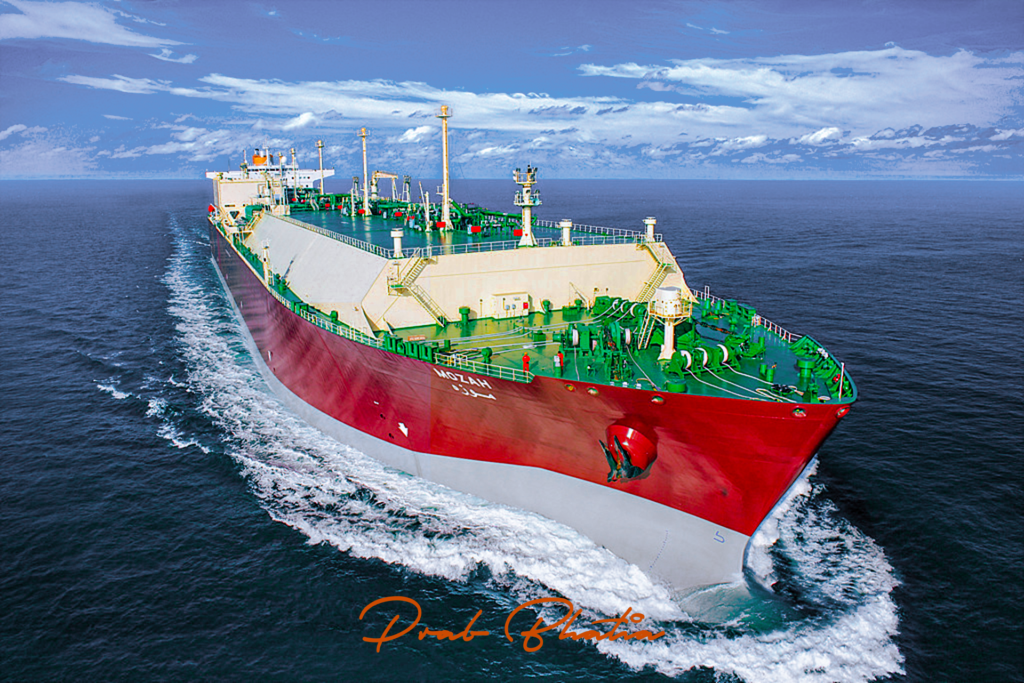
Mozah, 266,000m3, The Largest LNG Carrier Afloat Today
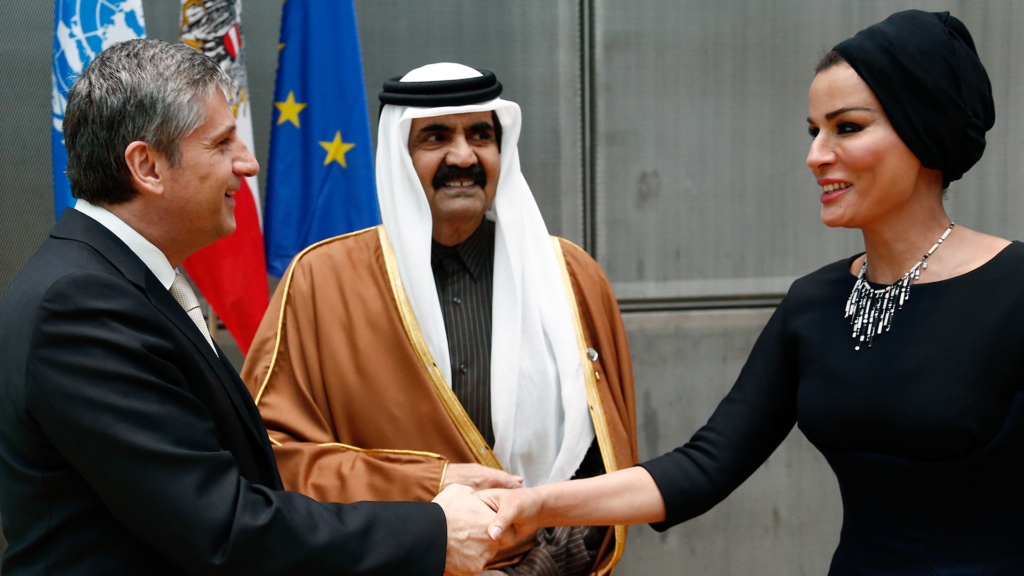
Sheikha Mozah bint Nasser2
Dates do not define eras; they are defined by the people who dared to imagine what did not yet exist.
With his passing, Qatar loses not just a former ruler, but the visionary who imagined what the country could become—and then built it.
For those of us who worked in the shipyards, who saw the fleet rise from blueprints to steel, his legacy is not just geopolitical. It is personal. It is welded into the hulls of forty‑five ships and counting that still carry Qatar’s energy across the world.
In the years since those shipyard days, I have often thought about how leadership leaves its imprint—not only on nations, but on the people who quietly build the machinery of progress. Sheikh Hamad bin Khalifa Al Thani’s vision shaped the skyline of Doha, the balance sheets of global corporations, and the geopolitics of energy. But for those of us who stood on steel decks in the Korean winter, who watched the Q‑Max hulls rise like cathedrals of industry, his legacy was something more intimate. It was the feeling of being part of a story larger than ourselves—a story of a nation discovering its voice, its confidence, and its future. His passing reminds me that dates do not define eras; they are defined by the people who dared to imagine what did not yet exist. And in that sense, the Father Emir’s era will continue to sail long after the man himself has gone.
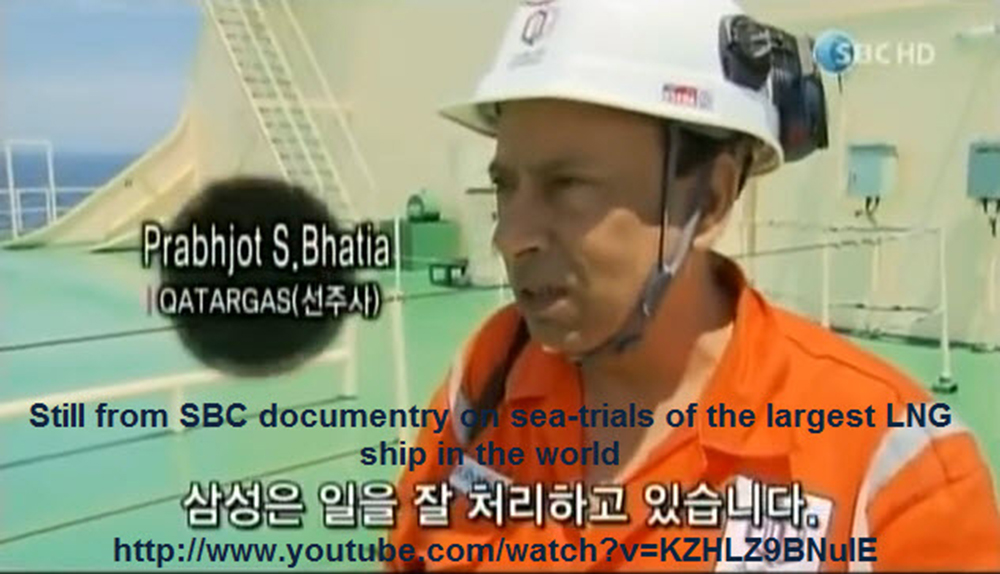
Still from SBC’s documentary on Q‑Max sea-trials — filmed exactly twenty years before the Emir’s passing, during a week that shaped both the fleet and the engineers who built it.
There is a quiet symmetry in the dates that I cannot ignore. Sheikh Hamad passed away on 12 July—a day after my birthday—and exactly twenty years after we were out at sea conducting trials on another Q‑Max hull built at Samsung. That week in 2006 was a blur of data, vibration measurements, reliquefaction tuning, and the hum of machinery settling into its first true rhythm. SBC had come aboard to film a documentary on the sea trials, capturing the raw, unvarnished reality of engineering at sea. The evening before, on 11 July, the shipyard surprised me with a small birthday gathering—a simple cake baked on board, a few laughs, and the warmth of colleagues who had become family. I mention this not to place celebration beside loss, but because it reminds me how deeply intertwined our lives became with Qatar’s LNG story. Twenty years later, as the Father Emir’s era comes to a close, I find myself thinking of that young engineer on the deck of a Q‑Max, unaware that he was living inside a chapter that would one day feel historic. Time has a way of revealing the meaning of moments we once took for granted.
4 thoughts on “PASSING OF AN ERA”
Arindam Munsi
Exceptional foresight to develop such a great LNG fleet and LNG production .. by the Emir ..
Thank you, Arindham. The scale of Qatar’s LNG vision was extraordinary — but what always struck me was the clarity with which the Emir saw decades ahead. He invested not just in ships and production, but in people, technology, and long-term stability. Those of us who worked on the fleet witnessed firsthand how that foresight reshaped the global energy landscape.
Thank you, Gopi. He truly was a visionary leader — one who understood that national progress rests on courage, discipline, and imagination. This tribute is just a small acknowledgement of a statesman whose decisions changed the trajectory of an entire region.

Exceptional foresight to develop such a great LNG fleet and LNG production .. by the Emir ..
Thank you, Arindham. The scale of Qatar’s LNG vision was extraordinary — but what always struck me was the clarity with which the Emir saw decades ahead. He invested not just in ships and production, but in people, technology, and long-term stability. Those of us who worked on the fleet witnessed firsthand how that foresight reshaped the global energy landscape.
A fine tribute to a visionary leader.
Thank you, Gopi. He truly was a visionary leader — one who understood that national progress rests on courage, discipline, and imagination. This tribute is just a small acknowledgement of a statesman whose decisions changed the trajectory of an entire region.