
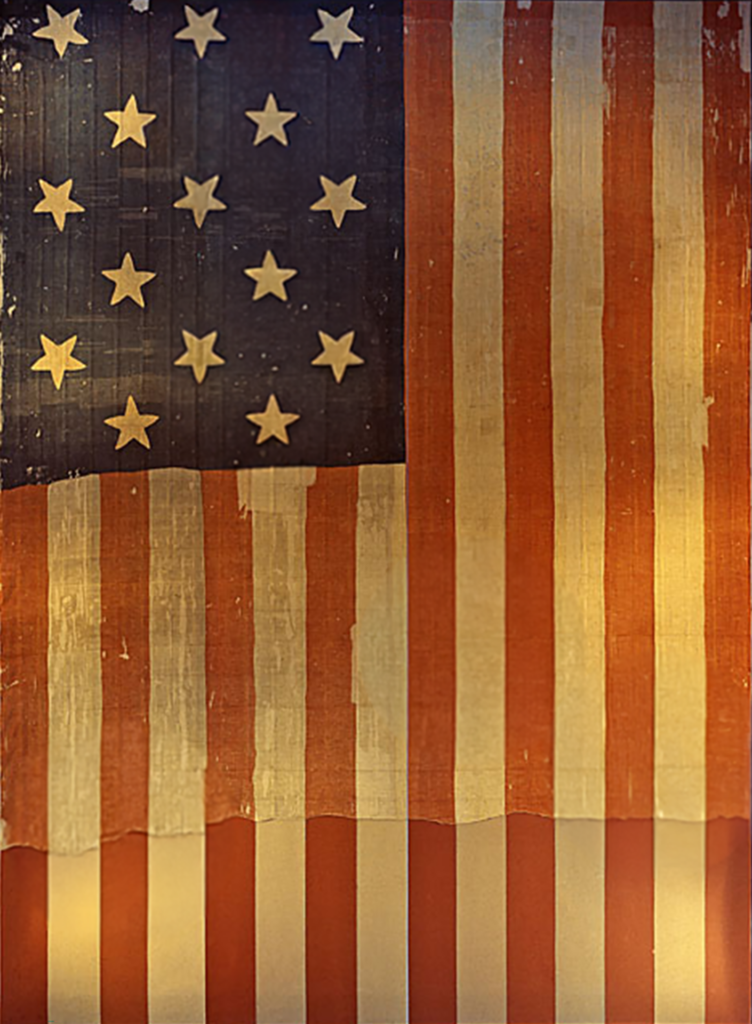
HOW BOMBAY DOCKYARD HELPED SHAPE AMERICA'S NATIONAL ANTHEM
America’s semiquincentennial is not just a celebration of one nation’s independence, but a reminder that independence everywhere is fragile, hard‑won, and must be protected from the corrosive pull of endless wars.
PROLOGUE: A DAY OF TWO HISTORIES
Today, 04 July marks America semiquincentennial (250th) Independence Day. I find myself thinking not only of the United States, but of India — and of the strange, beautiful ways in which our histories have brushed against each other across oceans, empires, and centuries.
Independence is never a small idea. It is a long, uneven struggle, shaped by ordinary people who refuse to surrender their dignity. The day is a reminder that independence everywhere is fragile, hard‑won, and must be protected from the corrosive pull of endless wars. And sometimes, the symbols of that struggle carry stories far beyond their borders.
One such symbol is the Star‑Spangled Banner, the American national anthem.
And one such story begins in Bombay Dockyard.
THE SHIP THAT CARRIED A SONG
“The 74-gun HMS Minden, backbone of the Royal Navy during the 18th and 19th centuries—on which Scott Key reportedly composed the U.S. national anthem ‘The Star‑Spangled Banner,’ was built in India’s Bombay Dockyard.”
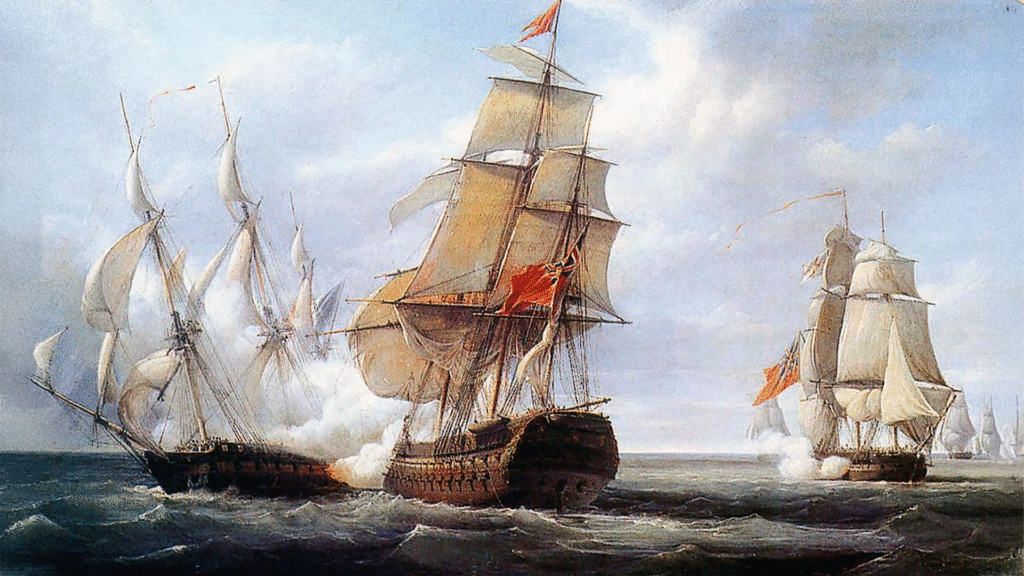
That is how I first wrote it in my book, Blocking India’s Shipbuilding Mise-en-Scene. But the story deserves more space — and more wonder.
HMS Minden was not just another British warship. She was a product of Indian craftsmanship — built from Malabar teak, shaped by the legendary Wadia shipwrights. She launched from a dockyard that had already been building ocean‑going vessels for centuries.
She was strong, elegant, and durable — the kind of ship that made admirals quietly grateful and enemies quietly nervous.
And in 1814, she became the unlikely cradle of America’s anthem.
A NIGHT OF BOMBARDMENT, A DAWN OF RESOLVE
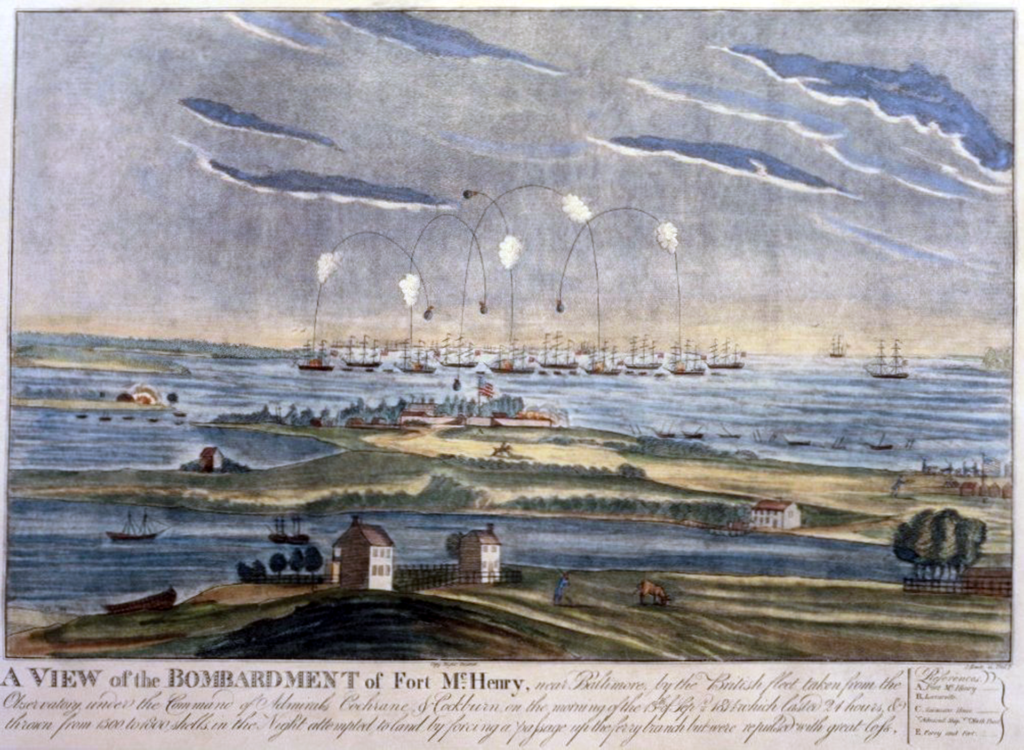
During the War of 1812, American lawyer Francis Scott Key boarded a British vessel to negotiate the release of a prisoner. He was detained temporarily — not as an enemy, but as a witness.
From the deck of HMS Minden, Key watched the British bombard Fort McHenry through the night. The sky was a theatre of fire. The outcome was uncertain. The young nation’s flag might not survive till morning.
But at dawn, through smoke and exhaustion, Key saw the flag still flying.
And he wrote. Those verses — scribbled in the aftermath of war — would become The Star‑Spangled Banner, sung today by millions.
And the deck beneath his feet had been built in India.
A MONUMENT, A CONTROVERSY, AND A CHANGING CONSCIENCE
The Francis Scott Key Monument in Baltimore was erected in 1911 to honour the man who wrote The Star‑Spangled Banner. For decades, it stood as a civic symbol of patriotism and artistic pride. But in recent years, Key’s legacy has come under renewed scrutiny. He was a slaveholder, and the third stanza of his poem contains lines that many interpret as celebrating the death of enslaved people who sought freedom with the British. As America began re‑examining its racial history — especially during protests against police brutality — the monument became a focal point of debate.
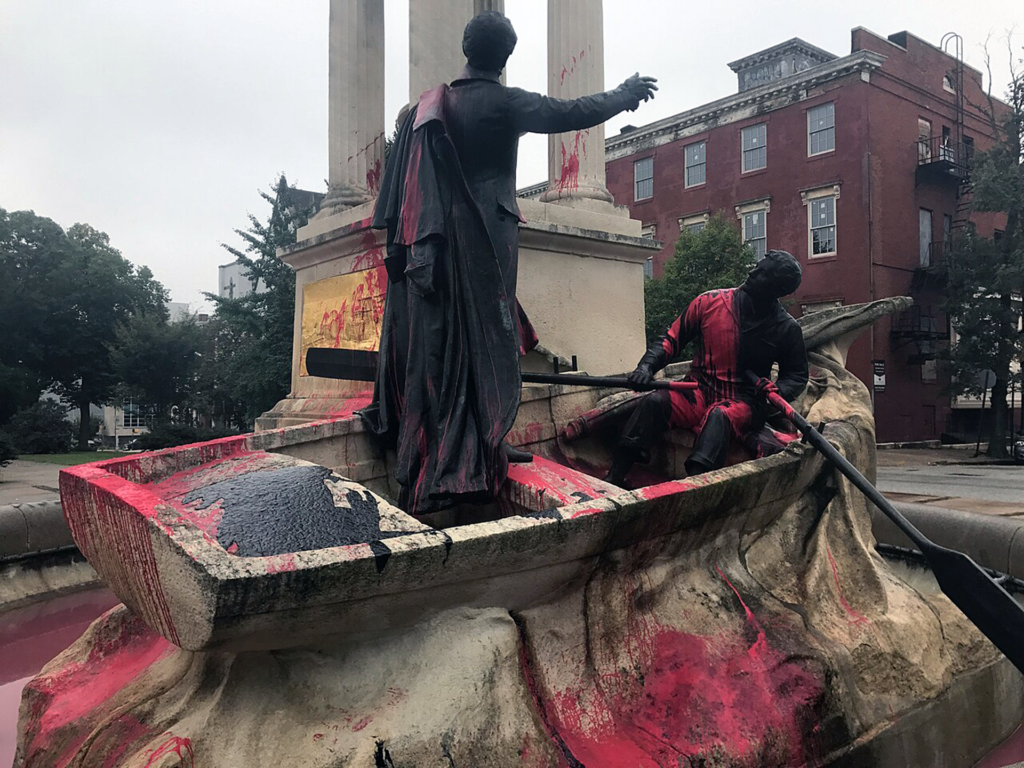
The defacement of Francis Scott Key’s monument in Baltimore — splashed with red paint and marked with the words “Racist Anthem” — is a reminder that national symbols evolve under the pressure of public conscience. Key was a slaveholder, and the third stanza of his poem contains lines that many interpret as celebrating the death of enslaved people who sought freedom with the British. In recent years, especially amid protests against police brutality, the anthem has become a site of debate, reflection, and reckoning. The monument’s defacement was not an act of random vandalism, but a societal response to the uncomfortable truths woven into America’s early history.
BOMBAY DOCKYARD: INDIA’S FORGOTTEN MARITIME POWERHOUSE
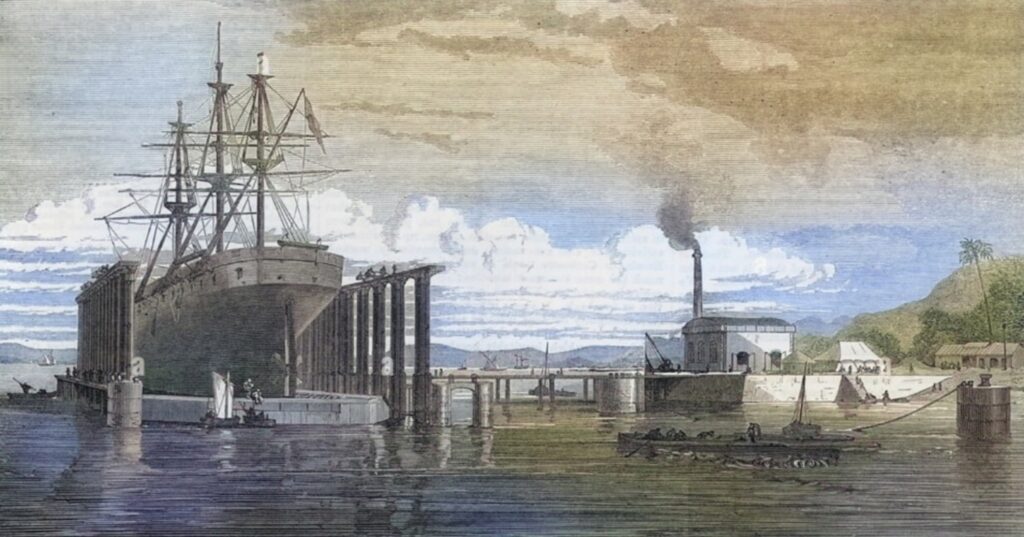
Bombay Dockyard was one of the greatest shipyards of its era. Its ships were prized for their longevity — teak resisted rot, storms, and time better than European oak. Many Wadia‑built ships outlived their British‑built counterparts by decades.
In my memoir, I have often returned to this place — not just as a historical site, but as a symbol of India’s engineering heritage, its maritime confidence, and its quiet mastery of craft.
To think that a piece of that heritage sailed into the heart of American history is both humbling and exhilarating.
A TRIANGULAR STORY OF THREE NATIONS
This single moment — Key writing aboard an Indian‑built ship — creates a remarkable triangle:
- America, fighting to defend its young independence.
- Britain, projecting its naval power across the world.
- India, whose shipbuilders unknowingly provided the stage for an anthem of freedom.
History is rarely linear. It is a web — and sometimes, a song written in one nation carries the timbre of another.
A PERSONAL REFLECTION
“A memoir rooted not only in history, but in lived experience.”
As I write this, I think of my Indian‑American friends celebrating today. I think of the anthem they sing, and the ship that carried its first words. I think of the dockyard I have walked through in my imagination countless times while writing my memoir. When the old Bombay Dockyard became the Indian Naval Dockyard, I spent three formative years there as an apprentice. I walked every lane of that yard, climbed its scaffolds, studied its drawings, listened to its old hands, and absorbed its stories, said goodbyes to the ships and sailors that never returned — and watched the commanders become commodores and commodores become admirals. Those years were not just training; they were initiation into a living maritime tradition.
And I think of independence — not as a flag, but as a responsibility.
America has been involved in many wars, not all of them noble. India has fought its own battles for dignity. Both nations know the cost of conflict.
On this 250th Independence Day, I hope every voice — especially the thoughtful voices of Indian‑Americans — speaks for peace, restraint, and wisdom. Because independence is not just won once. It must be protected every day.
EPILOGUE: THE ANTHEM AND THE SHIP
The Star‑Spangled Banner asks a simple question:
“Oh say, does that star‑spangled banner yet wave…”
And somewhere in that question, hidden beneath the music and the patriotism, lies a quiet Indian echo — the memory of a ship built in Bombay, carrying a poet, watching a flag survive the night.
History is full of such echoes. We just have to listen.
Great work Prabhjyot.
Thank you, dear Mahendra.